I am conflicted when it comes to whole wheat bread in general and this Einkorn whole wheat bread recipe specifically, I’m just not sure who to believe. Are all grains bad for us, including whole wheat? Or are whole grains our saving grace and we should try to have several servings a day?

Sadly, there are many sources on each side of the debate, and I’m pretty sure I’m not qualified to wade through all of the science behind each argument to give my own informed opinion about who is right and who is wrong.
Here’s a really quick recap of the debate… those who oppose eating wheat appear to be avoiding gluten, as well as anti-nutrients and are quite expressive in the overall lack of nutrients available in cereal grains in general. There are even whole books devoted to the subject of how disastrous whole wheat and whole grains have been for humans.
Those on the other side of the aisle believe that we should be shoving down somewhere between 5 and 10 servings of whole grains each and every day. This theory states that by eating whole grains, we are increasing out fiber intake, which is good for healthy bowel function, while also reducing our risk of many diseases, such as heart disease and strokes.
So where to go from here? I’ve reached the point where I am no longer comfortable obtaining half of my calories from super processed food and acting like that counts as whole grains. I’ve dropped my fast food habits and eat overly palatable factory food way less often than before.
But I’m not ready to give up fresh bread, pasta and other wheat products altogether. And since I’m not giving up on bread, I figure the best I can do is try to reduce my overall consumption of store bought white bread, while at the same time, trying to make sure that I get a decent amount of whole grains and fiber into my diet to help feed my gut microbiome.
And I haven’t even started thinking about using sprouted flour and grains.
Much like the benefits of eating sourdough bread, it appears that using either sprouted grains or sprouted flour enhances all of the benefits of grains while reducing many of the negative consequences. Remember the nasty things people have said about eating grains? The high gluten content, the anti-nutrients and low nutritional density? By using sprouted flour, gluten is reduced, anti-nutrients are broken down and the good nutrients in grains are made more accessible!
If you decide to go with this sprouted grains in your bread recipes, you can either sprout the grains yourself, or simply buy them. If you want to sprout them yourself, which I don’t, you’ll need to buy the whole grains, and then soak them for a period of time, usually measured in days, until they sprout just a tiny bit. Once they start to sprout, you’ll then need to dry them out, before grinding the now sprouted grains into flour. Or you can simply buy sprouted flour and let someone else do all the work.
Or you can choose to use Einkorn flour, or some other heritage wheat, that some folks believe doesn’t come with all of the baggage that modern wheat has.
I’ve already come to the conclusion that modern wheat has been altered so much that it has very little in common with the crop grown just 50 or 100 years ago. But I must admit that my kitchen has not caught up with my readings, and I don’t have any sprouted and ground ancient wheat grains laying around (yet). So my work around, which is likely less than perfect, is to use a combination of Einkorn whole wheat flour as well as a high extraction or all purpose version of Einkorn flour.

The recipe I chose to work with was from Peter Reinhart’s Whole Grain Breads book, which is great, if you like whole grains and bread. I also added some extra oat bran for flavor and fiber and ditched the two day process and went for a few hour time frame, which I’m sure results in slightly less awesome whole wheat bread, but still pretty good and so much quicker and easier, which in my house sometimes counts for more!
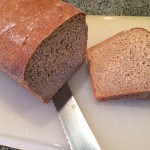
Einkorn whole wheat flour bread with oat bran
Equipment
- stand mixer
Ingredients
- 275 g Einkorn whole wheat flour
- 275 g Einkorn AP flour
- 75 g oat bran
- 5 g sea salt
- 8 g yeast
- 45 g honey
- 14 g olive oil
- 300 g water
Instructions
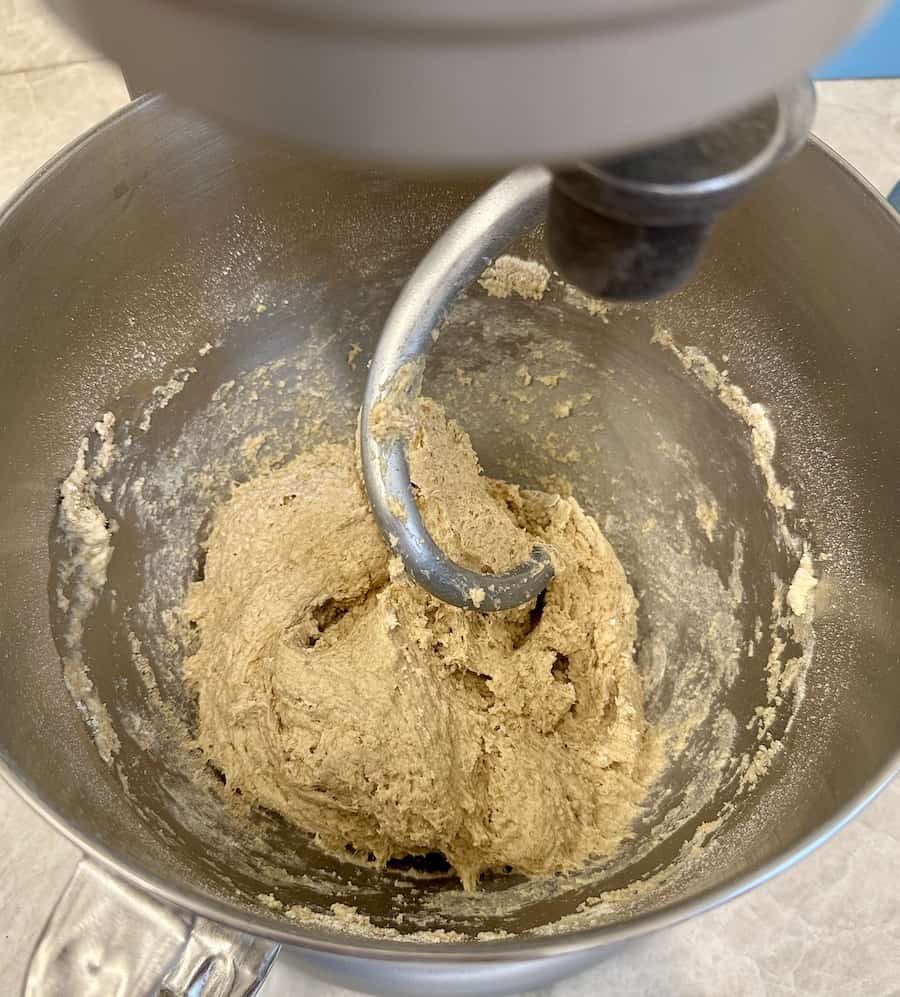
- Using a stand mixer, add all of the ingredients and mix until roughly combined and let sit for 15-30 minutes, the dough will be very shaggy
- Using a dough hook on medium speed, mix the dough for several minutes, until completely combined, the dough will still be fairly wet and may not be clearing the bowl
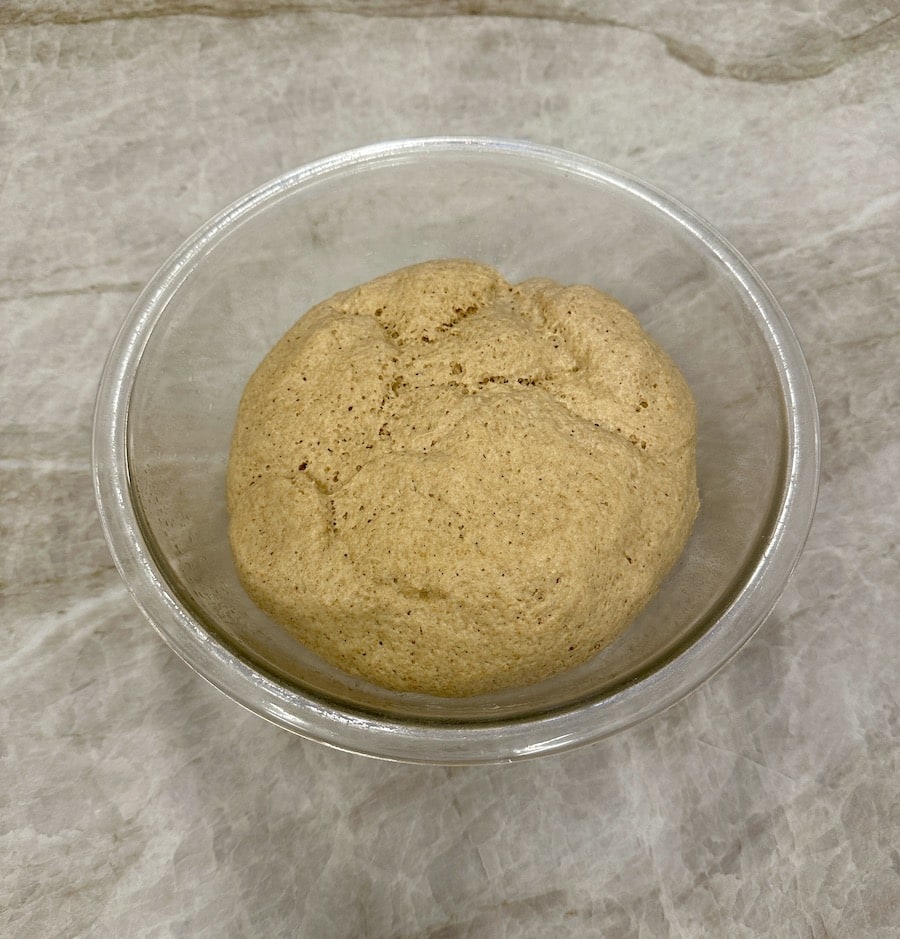
- Place dough into a lightly greased bowl in oven or microwave with a small cup of hot water to rise for 90 – 120 minutes, until it has almost doubled, folding the dough once or twice during the rise depending upon how sticky the dough is
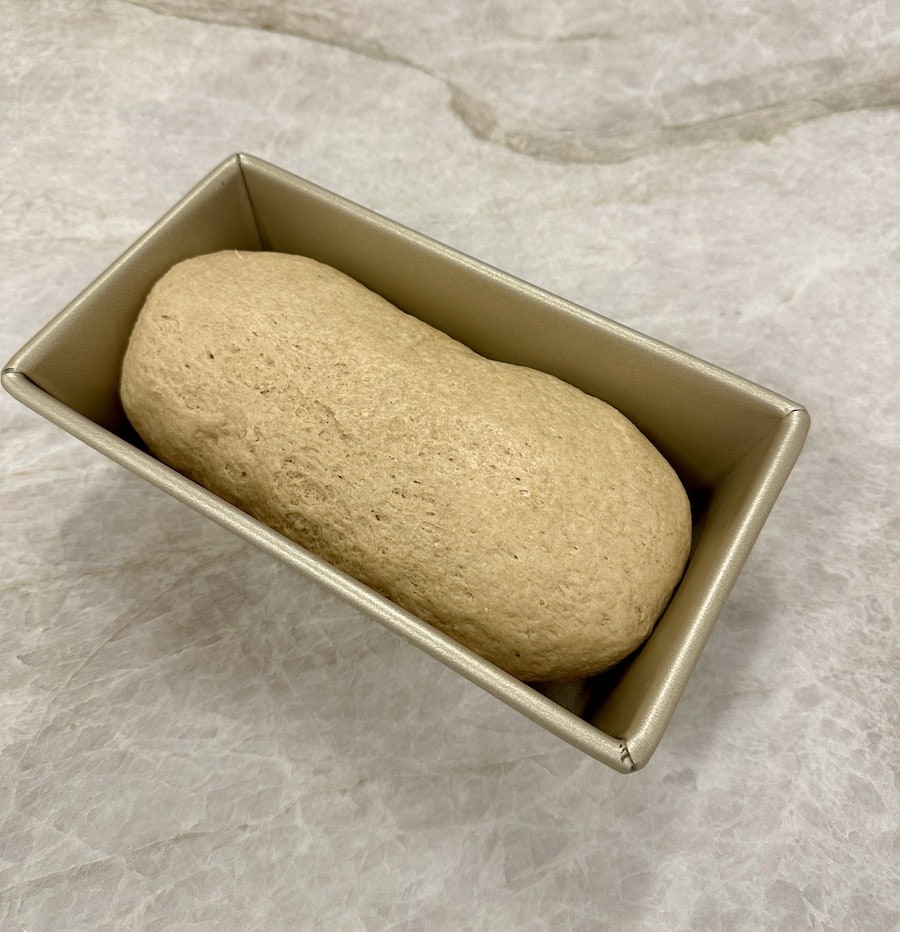
- Pour dough out onto lightly floured counter, shape the dough and place into a lightly oiled bread loaf pan
- Preheat oven to 425 degrees
- Place bread loaf back into microwave or oven with small cup of hot water and let rise again until dough just starts to rise above the rim of the loaf pan
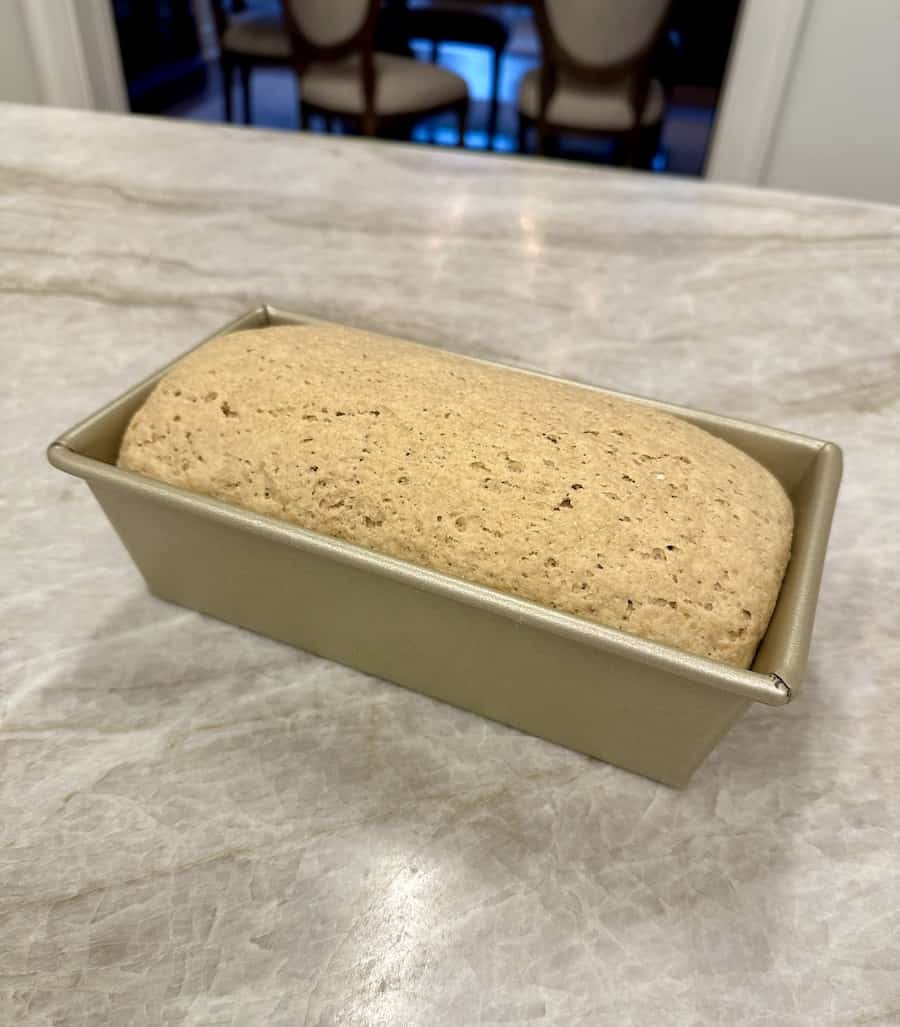
- Place bread loaf into preheated oven, and turn heat down to 350 degrees. If you would like to steam the bread a little, throw a few ice cubes onto the bottom of the oven as you close the oven door
- Bake 40 minutes, turning halfway through
- Bread should be done, but if you are worried, take internal temperature of loaf. It should be at least 195 degrees.
- Allow bread to cool at least 1 hour before serving. If you can.
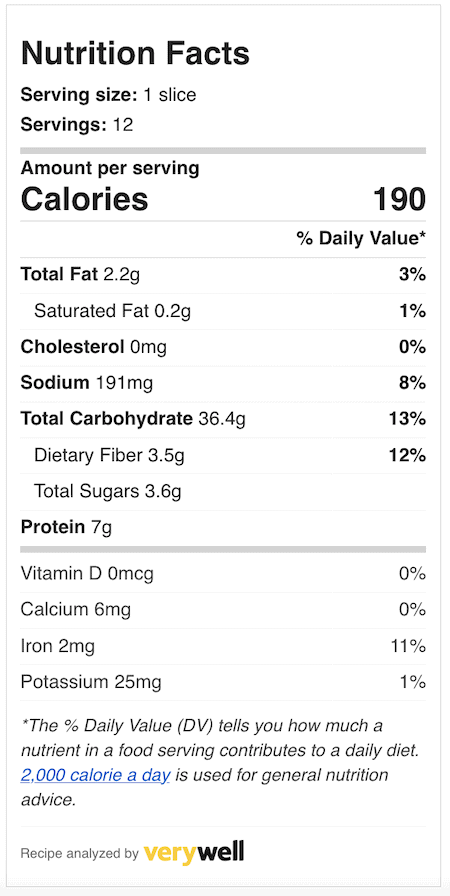
I did my best to put together a nutritional panel for this whole wheat loaf, but ran into trouble because the online calculator that I use does not recognize Einkorn whole wheat as a real ingredient. Instead, for the calculation, I acted as if the entire loaf was made with the high extraction AP flour, which will change the panel just a little bit. In real life the whole wheat loaf has about the same number of calories per slice, but will have a touch fewer carbs and some extra fiber compared to the nutritional panel below. Also, I have no idea how fat or thin you like to cut your slices, so I just assumed twelve slices per loaf, but those would be fairly generous slices.

You did not mention what size bread pan for this loaf.
Have you seen the sprouted Einkorn flour now sold by Jovial Foods? I made quick biscuits with 50% sprouted Einkorn 50% all purpose Einkorn this morning. Very good!
Sorry about that! But I’ll use whatever loaf pan I have around, but usually I grab a standard 5×9 pan. And thanks for the heads up about the sprouted wheat from Jovial, I hadn’t seen that yet, I know it’s expensive, but if I’m cooking bread, I certainly like to have that around!